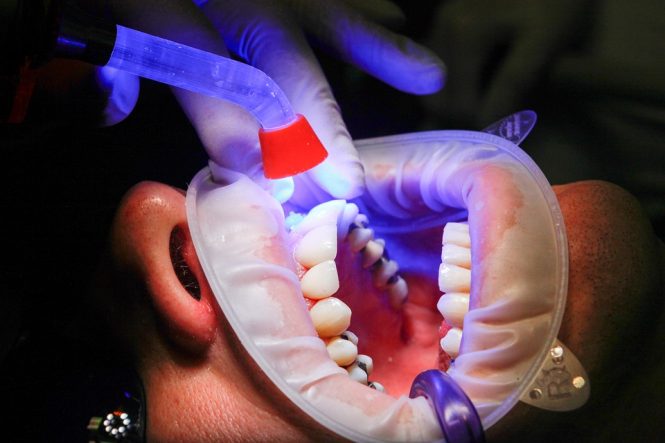
The Future of Dentistry: How Technology Is Changing the Game
The field of dentistry has undergone significant transformations in recent years, and technology has been at the forefront of this change. From digital impressions to robotic surgery, advancements in technology are revolutionizing the way dentists diagnose, treat, and prevent oral health issues. In this article, we will explore the current state of dentistry and how technology is shaping its future.
Digital Dentistry: A New Era
Digital dentistry refers to the use of digital technologies such as computer-aided design (CAD), computer-aided manufacturing (CAM), and 3D printing to create dental restorations, implants, and other oral appliances. This technology has enabled dentists to create highly accurate and customized dental prosthetics, reducing the need for manual impression taking and increasing patient satisfaction.
One of the key benefits of digital dentistry is the ability to create same-day dental restorations. With the use of in-office CAD/CAM systems, dentists can design and manufacture dental crowns, inlays, and onlays in a matter of hours, eliminating the need for temporary restorations and multiple appointments.
Artificial Intelligence in Dentistry
Artificial intelligence (AI) is another area where technology is making a significant impact in dentistry. AI-powered systems can analyze dental images and detect oral health issues such as cavities, gum disease, and oral cancer more accurately and quickly than human dentists. These systems can also help dentists diagnose and treat complex cases, such as tooth fractures and dental trauma.
AI-powered chatbots are also being used in dentistry to improve patient engagement and education. These chatbots can provide patients with personalized oral health advice, appointment reminders, and post-operative instructions, helping to improve patient outcomes and reduce no-show rates.
Robotic Surgery in Dentistry
Robotic surgery is a relatively new area of development in dentistry, but it has the potential to revolutionize the way dentists perform complex surgical procedures. Robotic systems can provide dentists with enhanced visualization, precision, and dexterity, allowing them to perform procedures such as implant placement and wisdom tooth extraction with greater accuracy and minimal trauma.
3D Printing in Dentistry
3D printing is another technology that is changing the face of dentistry. With the use of 3D printing, dentists can create highly customized dental models, implants, and oral appliances, such as dentures and orthodontic appliances. This technology has also enabled the creation of personalized dental implants, which can be designed to match the exact shape and size of a patient’s natural tooth.
Virtual Reality in Dentistry
Virtual reality (VR) is being used in dentistry to improve patient experience and reduce anxiety. VR headsets can provide patients with a immersive and relaxing experience, helping to distract them from the sounds and sensations of dental procedures. VR can also be used to educate patients about their oral health and provide them with personalized treatment plans.
The Future of Dentistry
As technology continues to evolve, we can expect to see even more innovative applications in dentistry. Some of the potential advancements on the horizon include:
- Personalized medicine: With the use of genetic testing and AI-powered systems, dentists will be able to provide patients with personalized treatment plans tailored to their individual needs.
- Regenerative dentistry: Scientists are currently exploring the use of stem cells and biomaterials to regenerate teeth and other oral tissues, potentially eliminating the need for dental implants and prosthetics.
- Teledentistry: With the use of telecommunication technologies, dentists will be able to provide patients with remote consultations and monitoring, improving access to care and reducing wait times.
In conclusion, technology is revolutionizing the field of dentistry, providing dentists with new tools and techniques to diagnose, treat, and prevent oral health issues. As these technologies continue to evolve, we can expect to see even more innovative applications in the future, improving patient outcomes and changing the game of dentistry forever.
The development of $$f(x) = \sqrt{x}$$ functions in dental algorithms and the application of $$\frac{dy}{dx} = \frac{1}{2\sqrt{x}}$$ derivatives for predictive analysis have significantly enhanced the accuracy of dental treatments.
In dental material science, the composition of $$\text{ZrO}_2$$ and $$\text{Al}_2\text{O}_3$$ in ceramic restorations has improved their durability and aesthetic properties.
As the field of dentistry continues to evolve, it will be exciting to see how these technological advancements shape the future of oral healthcare.